
Chase County Criminal Docket Searches
JUSTICE Trial Court Case Search is Nebraska's public route into Chase criminal matters. It works as a paid party-name search. Witness names will not pull anything. The first question is where the case sits. Misdemeanors, ordinance violations, traffic cases, and early felony proceedings appear in County Court, while a felony that gets bound over moves to District Court. Have the defendant's name ready, plus the case number, year, and court level if you know them. A result can include a summary, parties, offense information, financial entries, the Register of Actions, hearings or orders, judge notes, and qualifying images. Treat what you find as a starting point for reading the record. The clerk's certified document, not a search result, is what to rely on.
- Open JUSTICE One-Time and enter the party name after accepting its terms.
- Review the matching result with the court and case type in mind.
- Read the Register of Actions in date order.
- Check for a reset, continuance, completed hearing, or filed order.
- Ask the responsible Chase clerk for inspection, a plain copy, or certification when needed.
A calendar result can identify a setting, but the Register of Actions and filed order are needed to learn what later happened to that setting.
Chase County Docket Search Limits
Nebraska case numbers open with a type code. CR marks a criminal file. The full number usually blends type, year, and a sequence, which keeps a criminal matter distinct from TR traffic, JV juvenile, CI civil, PR probate, and SC small claims. A citation number is a different key, so do not feed it in as a JUSTICE case number.
The One-Time party search costs $17. It returns up to 30 cases over a three-day window and notes a 24-hour entry lag. Subscriber search adds filters for party, court type, case type or subtype, county, year, judge, attorney, case number, and judgment date. That tier runs $100 annually. Detail costs $2 per case. For the full picture, the Nebraska Judicial Branch's JUSTICE case-information service explains this access route. A brand-new filing, a restricted matter, a spelling variation, or a narrow search can each leave you with an incomplete result.
Criminal Dockets: What They Show
The Register of Actions lists events in order. Chase detail can show the parties, offense information, hearing and order activity, payments or costs, and accessible images. Read it beside the case summary, never as if each entry were the complete document. A hearing listing shows a setting, not a completed hearing. A financial entry is not a certified judgment.
| Case number | A criminal case uses the CR type, year, and sequential number. |
|---|---|
| Case summary | Caption, case type or subtype, parties, attorneys, judge, status, and dates identify the matter. |
| Offense information | Available offense data must be read with the later plea, dismissal, order, or disposition. |
| Register activity | Filing, service, motion, hearing, reset, continuance, plea, disposition, and filed-order events appear in date order. |
| Costs and images | Costs, payments, and qualifying document images may appear, subject to restrictions. |
When the outcome itself matters, ask for the filed order or judgment instead. The register points to that event. It never turns a charge or setting into a ruling.
Chase County Misdemeanor Docket Counter
Karen Mueller serves as Chase County Court Clerk Magistrate. She runs the County Court side of the criminal split. Misdemeanors and ordinance complaints land here. Traffic infractions and traffic misdemeanors do too. The County Court phase of felony probable-cause and initial matters also stays here. Nebraska allows city and village ordinance complaints in County Court. Chase runs no separate municipal docket. The office sits at 921 Broadway, Imperial, NE 69033, with mail to P.O. Box 1299, Imperial, NE 69033. The listed phone is 308-882-7519. Hours run Monday through Friday, 8:00 a.m. to 4:00 p.m. Name the court and case number when you call, plus the date. Say exactly which record you want. That could be the register, a paper, a plain copy, or certification. The Nebraska Judicial Branch's Chase County Court contact page identifies the local office.
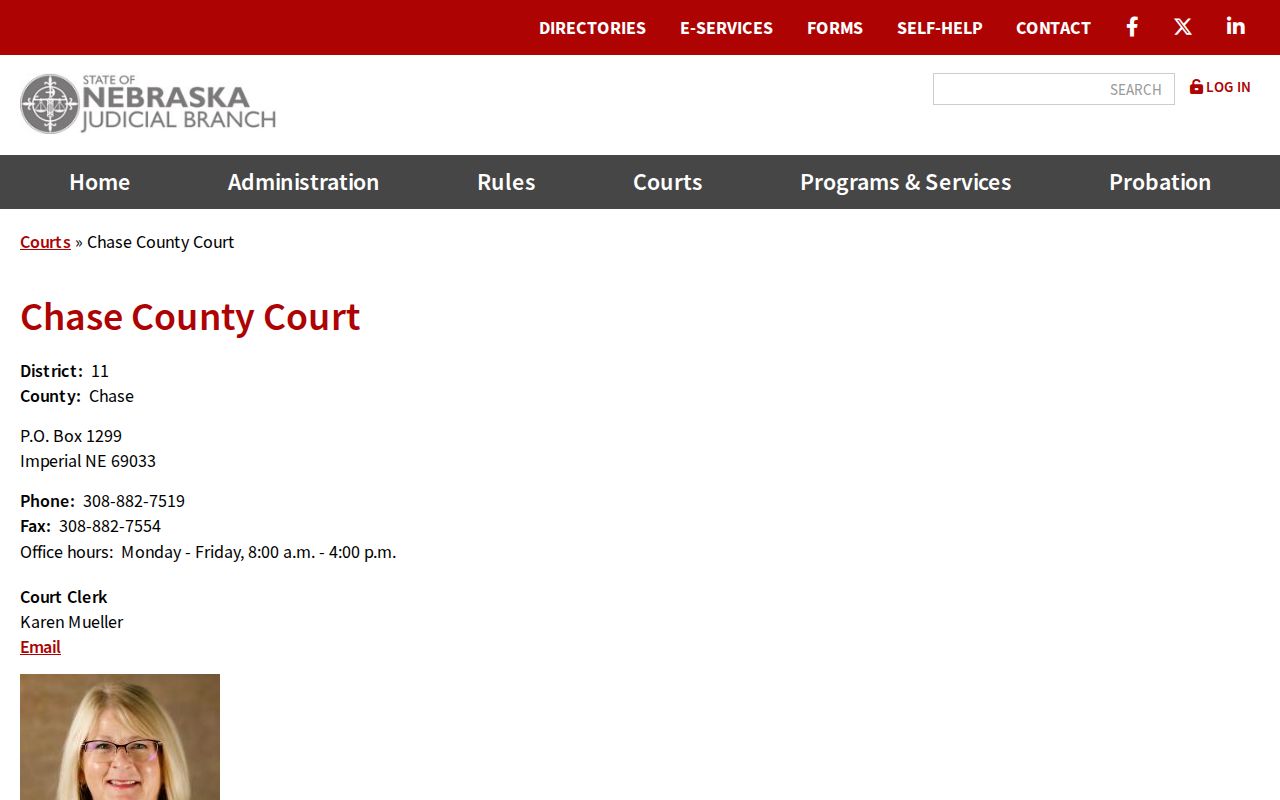
This County Court route matters when the case is a misdemeanor or ordinance matter rather than a felony that advanced to District Court. One caution is worth remembering. County Court and District Court records can share a courthouse address yet need different clerks, case types, and search choices. Check which clerk holds yours.
Criminal Case Stages on the Docket
A felony can begin in County Court. It starts with probable-cause or initial proceedings there, then moves to District Court after bind-over. Misdemeanors, ordinance matters, and many traffic criminal cases generally stay in County Court. Whatever the path, the register should separate the initial filing from a hearing, a plea, trial activity, and a final disposition or sentence.
Docket flow: Charge or complaint filed › Initial or probable-cause proceeding › Arraignment or plea › Motion and pretrial settings › Trial or plea resolution › Disposition, sentence, or filed order
A continuance changes the date. It does not decide the case. Find the replacement setting, then the later entry showing whether the hearing actually occurred. For more, the Docket Search page details the available case-search route.
One Chase County Felony Filing in FY2025
FY2025 filings give a sense of local scale. They describe no one's current case or outcome. Chase District Court reported one felony filing and seven “other criminal” filings between July 1, 2024 and June 30, 2025. “Other criminal” is its own report category. Do not relabel it as felony or read it as a count of convictions.
County Court reported 18 adult misdemeanor filings and 110 traffic filings that same year. Juvenile filings numbered 11, split between two 3A cases and nine delinquency cases. Filings are not people. They are not hearings or dispositions. The Judicial Branch's felony-process information shows why a Chase felony can carry County Court activity before the District Court record picks up the later plea, trial, sentencing, or disposition entries.
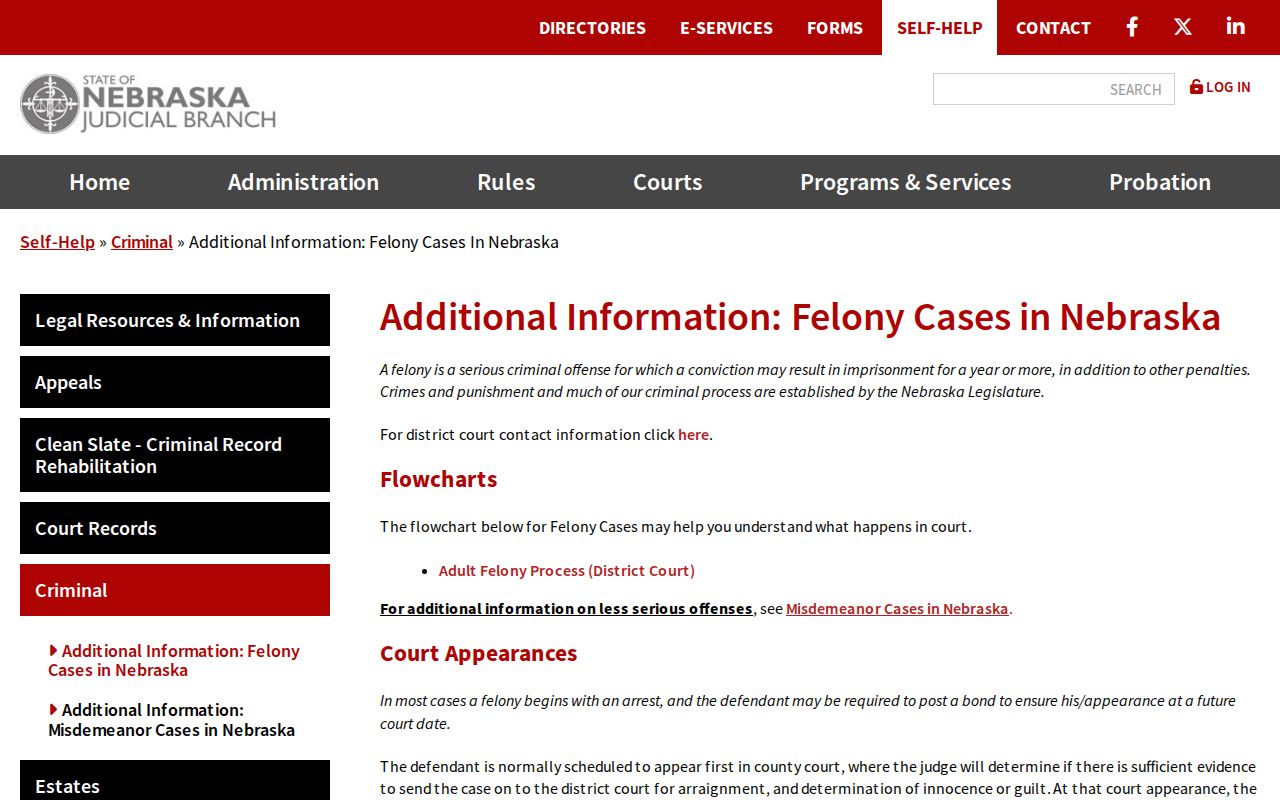
Case types can move between courts in Chase County, so confirm each result's court level before assuming a criminal record is absent. A felony that binds over leaves County Court and continues in District Court. FY2025 counts only describe filings made during that reporting period, not a roster of people, convictions, or cases still pending.
Chase County Criminal Docket Courts
Chase County splits its criminal records by court level. County Court handles misdemeanors, ordinance violations, traffic cases, and the early stages of a felony. Once a felony is bound over, District Court takes the file. That is where pleas, motions, trials, sentences, and later criminal entries live. District Court also holds major civil, domestic-relations, protection-order, and administrative-appeal records. Do not mistake those for criminal cases. The court sits in Nebraska's regional District 11. A statewide JUSTICE search can be narrowed by court, county, case type, and year. Restrictions or lag can still leave the online picture incomplete. The courthouse public-access terminal offers another route during business hours. The Nebraska Judicial Branch posts a Chase District Court contact page with office details.
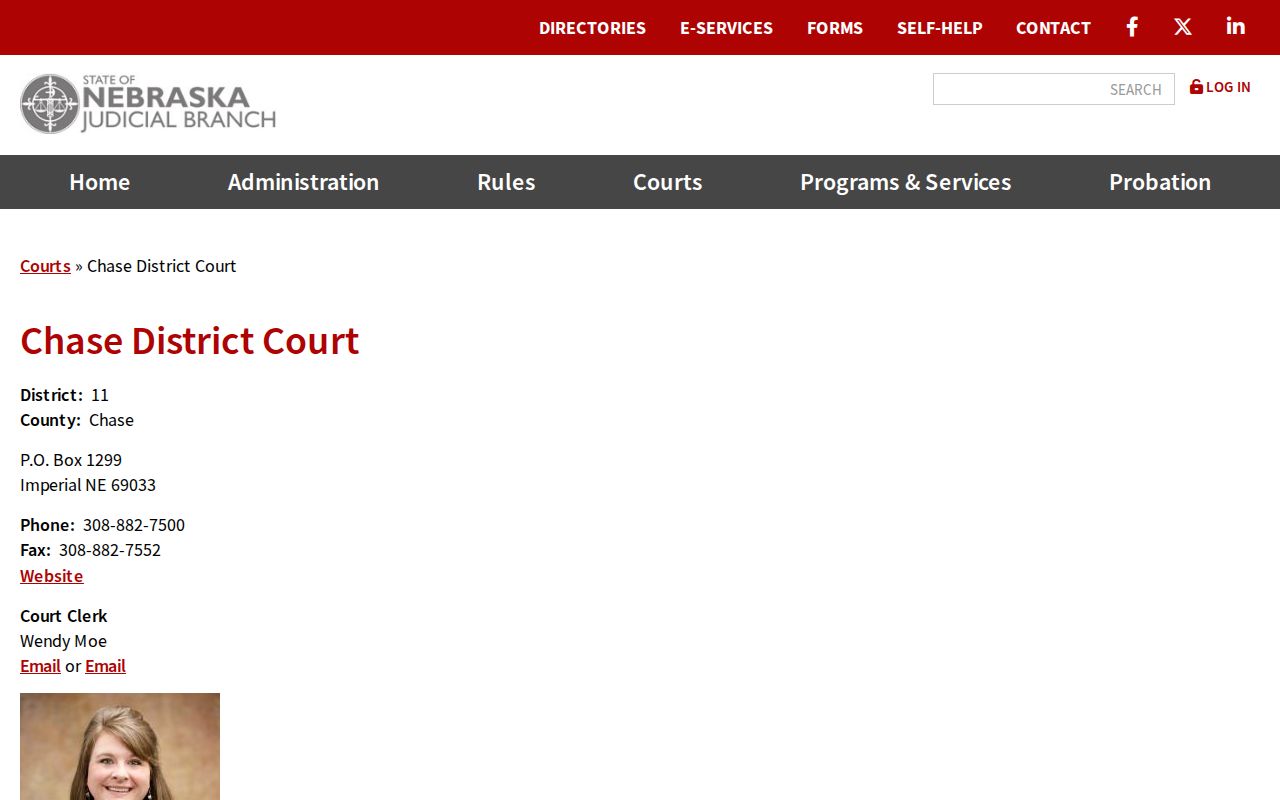
Route felony requests to the District Court office. That habit avoids sending a post-bind-over file request to the wrong counter at County Court.
Chase County Criminal Clerk Routing
For a District Court felony or any other District Court criminal file, call Wendy Moe. She is the Chase District Court Clerk. Her office sits at 921 Broadway and accepts mail at P.O. Box 1299. It lists its phone as 308-882-7500. Hours are Monday through Friday, 8:00 a.m. to 4:00 p.m. For a County Court misdemeanor, ordinance, traffic, or early-stage felony record, call Karen Mueller instead. A mailed request should name the court, the case number or caption, and a date range. Include the exact document wanted and the delivery route. Say whether a plain or certified copy is needed. The clerk posts no turnaround time, staff-search fee, or certified docket or judgment fee. Confirm those details directly. The Judicial Branch's misdemeanor case information adds state context for County Court procedure.
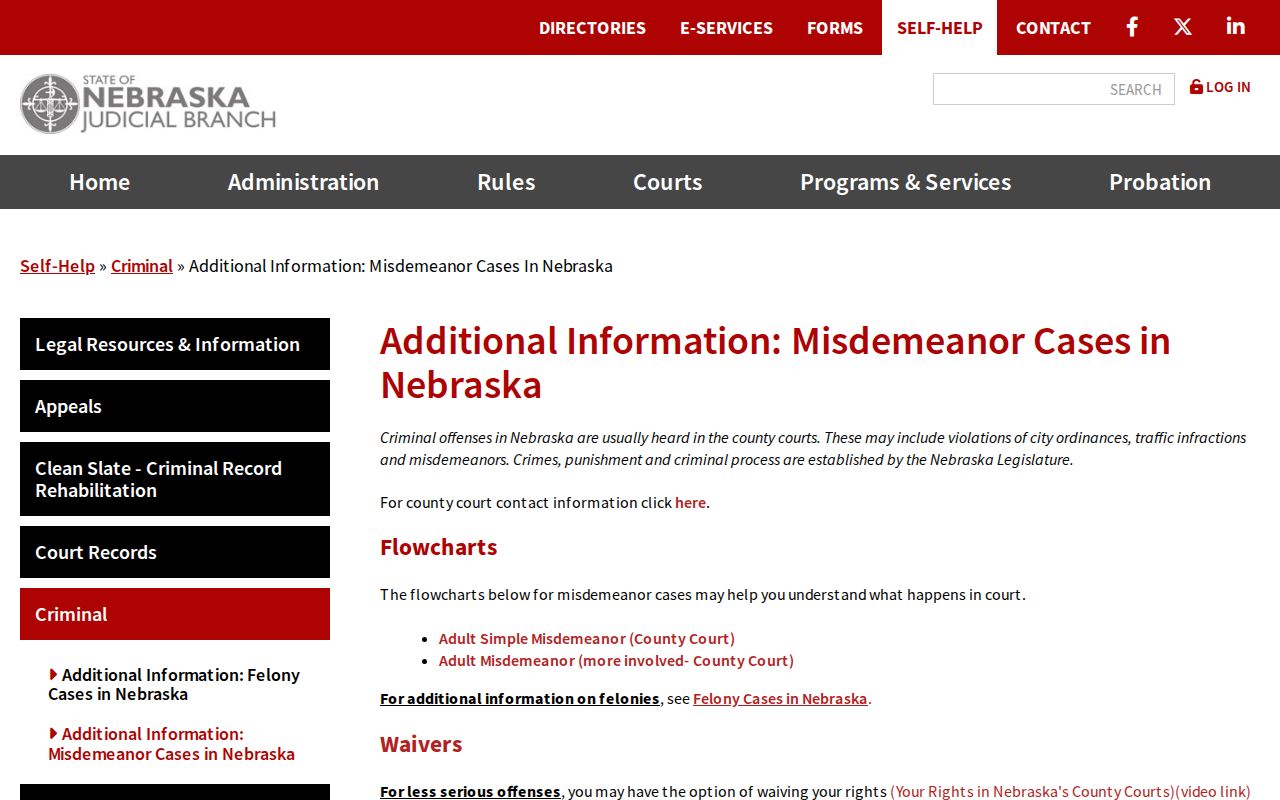
County Court has its own quirks even without a felony file. A citation or hearing route can still shape how that request proceeds.
Access Rules for Criminal Dockets
Nebraska's public-access rules call for equal access along with electronic indexes, case summaries, Registers of Actions, calendars, orders, decrees, and available images. Remote JUSTICE access and the courthouse terminal both sit inside that system. Maintenance or outages can interrupt service, and online access never promises that every document in a public case will display.
Public-access rules:
Nebraska Supreme Court Rule §1-803 establishes equal public access, subject to law and the rules.
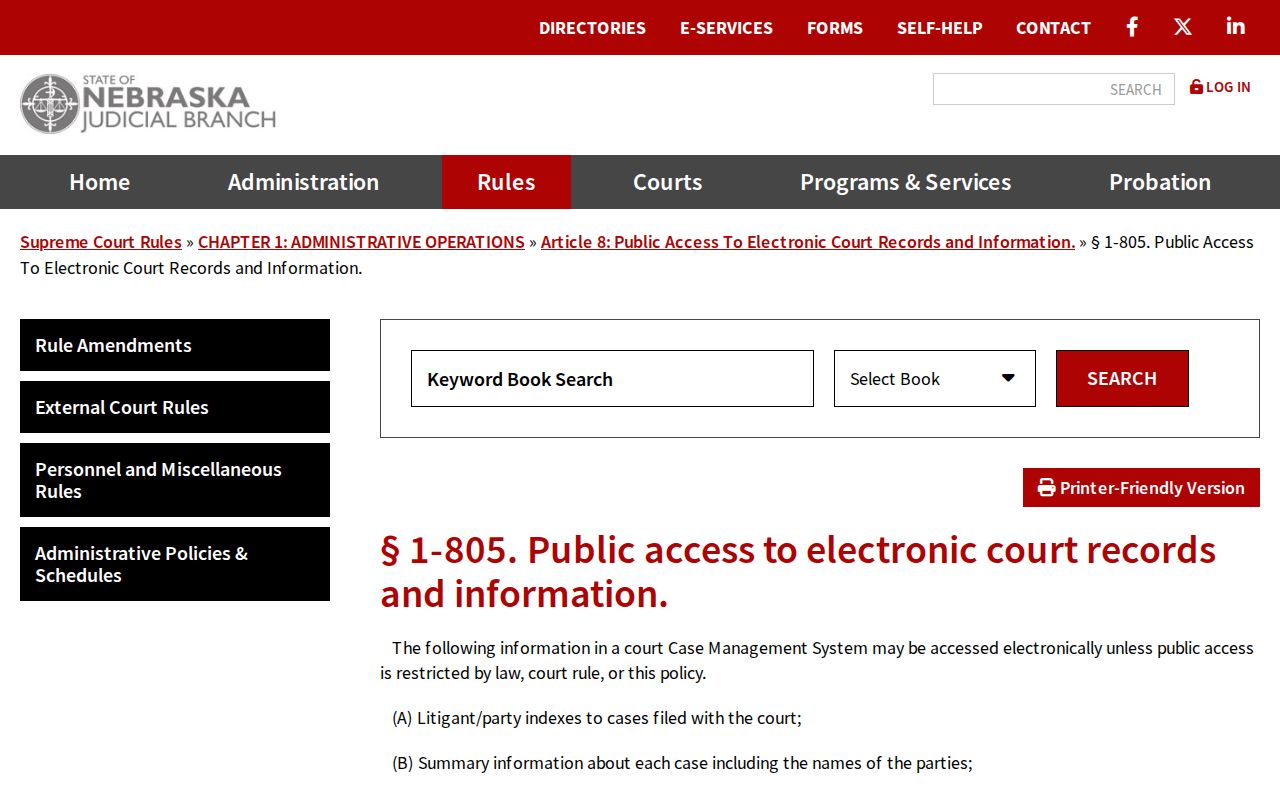
Nebraska Supreme Court Rule §1-805 covers electronic indexes, summaries, registers, calendars, orders, decrees, and available images.
Nebraska Supreme Court Rule §1-808 excludes sealed, confidential, juvenile, adoption, criminal-history, and other protected information.
Photocopies run $0.25 per page. The fee table also lists $1 for executing a certificate and seal and $3 for an authenticated certificate with three seals. No confirmed Chase fee exists for a certified docket or judgment. The Judicial Branch's electronic-access rule spells out the categories available electronically.
Seeing a case in an index or register changes nothing about protection. A sealing order still controls, and access does not turn shielded information into a public record.
Missing Chase County Criminal Dockets
When a Chase County docket search comes up empty, start with the basics. Check the spelling. Confirm the person was a party rather than a witness. Also verify whether the case belongs in County Court or District Court. Then account for the stated 24-hour lag. Other culprits include a calendar reset, retention limits, missing images, or a statutory restriction. A free calendar helps with current or future settings. Yet a no-result warning never proves that no hearing exists. Juvenile material is the most limited. Chase juvenile matters route through County Court, but qualifying juvenile records should seal automatically. Sealed events stay private. Adoption files, confidential material, protected criminal-history data, and retention-limited records can all be absent too. A gap in search results says nothing about a person's history. For an older, restricted, or online-missing record, try the courthouse terminal first. Then try the clerk who keeps the file. History researchers can also turn to Chase County's RG219 Archives collection. It spans 1886 through 1977 across 58 microfilm reels. Collection scope alone, though, proves nothing about whether a courthouse record exists. A clerk can walk you through the Chase records route. No clerk can advise a caller on how a criminal case should be handled.